Don’t like your current reality in practice?
Good. That usually means you have reached the point where “just getting through the week” is no longer enough.
Do you want career advice, market intelligence, professional development or simply wellbeing – check the articles below.
If you can't find what you're looking for, the Federation team can help. We're here to answer career questions - no CV, no commitment.
Speak to the Team46 articles

Good. That usually means you have reached the point where “just getting through the week” is no longer enough.

In optics, legacy carries weight. A practice that has stood for generations commands respect before a single eye test begins. The name above the door means something. Patients remember it. Families return. Staff feel part of something bigger than themselves.

It is a familiar conversation in practice. An optometrist tells me they will apply for a new role once they complete another course. A dispensing optician says they will consider moving once they feel more confident with complex varifocal dispensing. A practice manager says they will step up when the “right opportunity” appears.

It’s an easy question to ask and a harder one to answer honestly. It isn’t really about whether someone is pleasant, organised, or technically competent. And it’s not about whether the practice hits its numbers or the rota is fair most weeks. The question sits somewhere quieter than that, in the space between how you show up at work and how much of yourself you feel able to bring with you when the doors open and the clinic starts to fill.

You can tell a lot about a practice by what happens at 5:45pm on a Saturday.


Why What You Put Into Your Career Is Exactly What You Get Back

It does not arrive dramatically. It builds quietly. You notice it when the Sunday evening feeling starts creeping into Saturday afternoon. When a 25 minute sight test feels like an hour. When conversations in the staff room turn from light-hearted to loaded. When you begin to question whether it is you who has changed, or the practice.

In busy optical practices, mindset shapes everything from patient experience to sales performance. These common thinking habits can quietly undermine confidence, teamwork, and results if left unchecked.

It begins with small things. You are the one who swaps a Saturday to help the team. You stay late when a clinic overruns. You check in on colleagues. You smooth over tension between reception and the test room. You absorb pressure from patients who are frustrated about delays. You tell yourself it is just part of being committed.

It is easy to look at another practice and imagine it must be better. Shorter testing times. Higher salary. No Saturdays. A more supportive director. A tidier dispensary. The grass often looks greener when you are standing in the middle of a busy clinic, running late, with a challenging patient waiting outside and a pre-reg asking for supervision at the same time.

It tells you something about where the profession is heading.

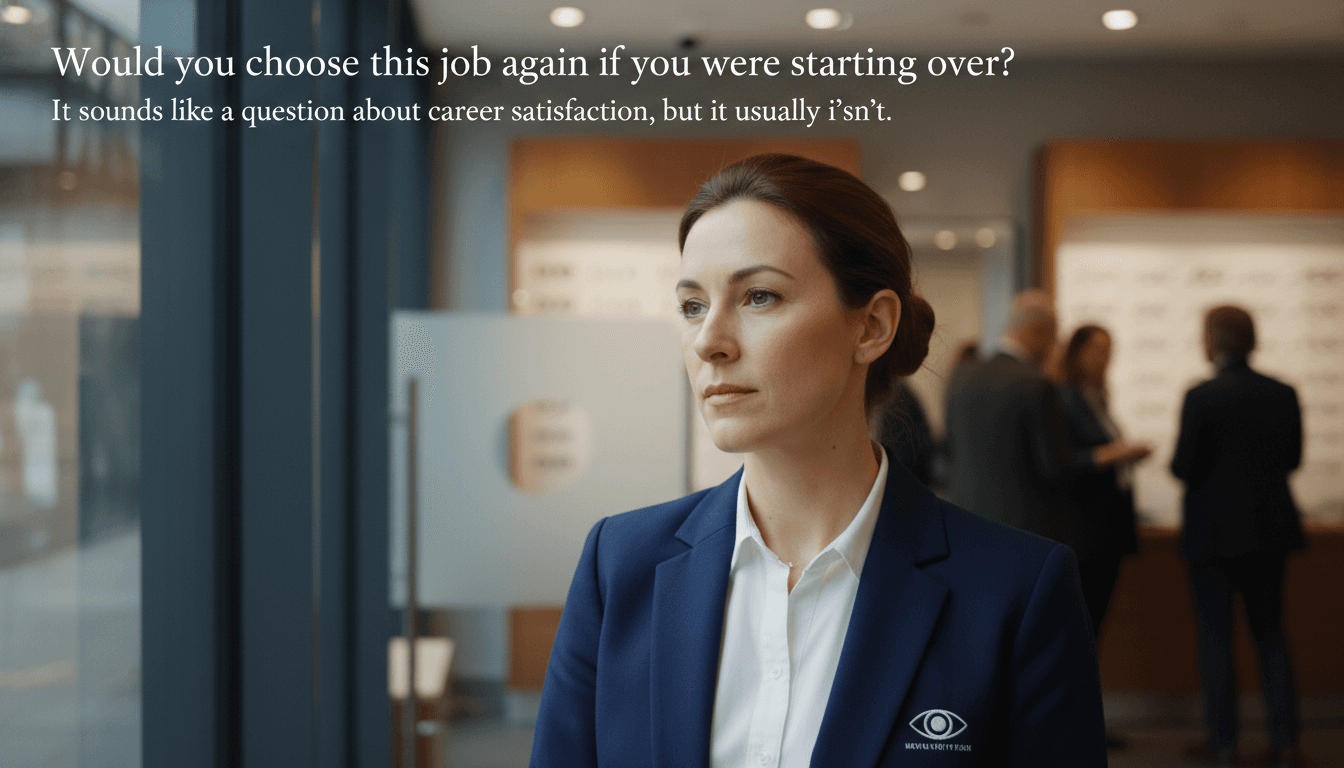
It sounds like a question about career satisfaction, but it usually isn’t. It’s not really about whether you enjoy the work, or whether you’d recommend it to someone else, or whether the industry has changed since you first stepped into it. It’s a quieter, more personal question than that. It’s about whether the version of you who walks into work now still recognises why you said yes in the first place.

It sounds like a simple question, but it rarely lands that way. It isn’t really about whether you enjoy your work, or whether you’re good at it. And it definitely isn’t about whether you’re grateful to have a job. It’s about something quieter and harder to admit: what it costs you to keep showing up as yourself, day after day, in a practice that never really slows down.

This question sounds simple, but it rarely is. In practice, it isn’t really about sleep or resilience, and it’s definitely not about whether you can “push through” a bit more. It’s about something quieter and more uncomfortable: whether the tiredness you feel still lifts when the pressure eases, or whether it’s started to feel like part of who you are at work. In an optician’s practice, where care, pace, and expectation sit on top of each other all day, that line can blur without anyone noticing.

Nearly a century ago, a leading psychiatrist wrote about human care in a way that still feels uncomfortable today. Not because it is outdated, but because it is so simple that it exposes how far we drift from what actually works.

It sounds like a simple question, but it rarely is. It isn’t really asking whether you enjoy your job, or whether you had a good day today, or whether someone thanked you at the end of an appointment. It’s asking something quieter and more uncomfortable. It’s asking whether, when the doors are locked and the lights are dimmed, the work you did still feels like it belonged to you.

Most people don’t ask this question because they’re feeling flat or disengaged. They ask it because something feels oddly hollow even though they’re still showing up, still delivering, still holding things together. In an optician’s practice, that can be easy to miss because the day keeps demanding things from you regardless of how you feel. Clinics run, patients arrive, decisions still need to be made. The work continues whether you’re motivated or not.

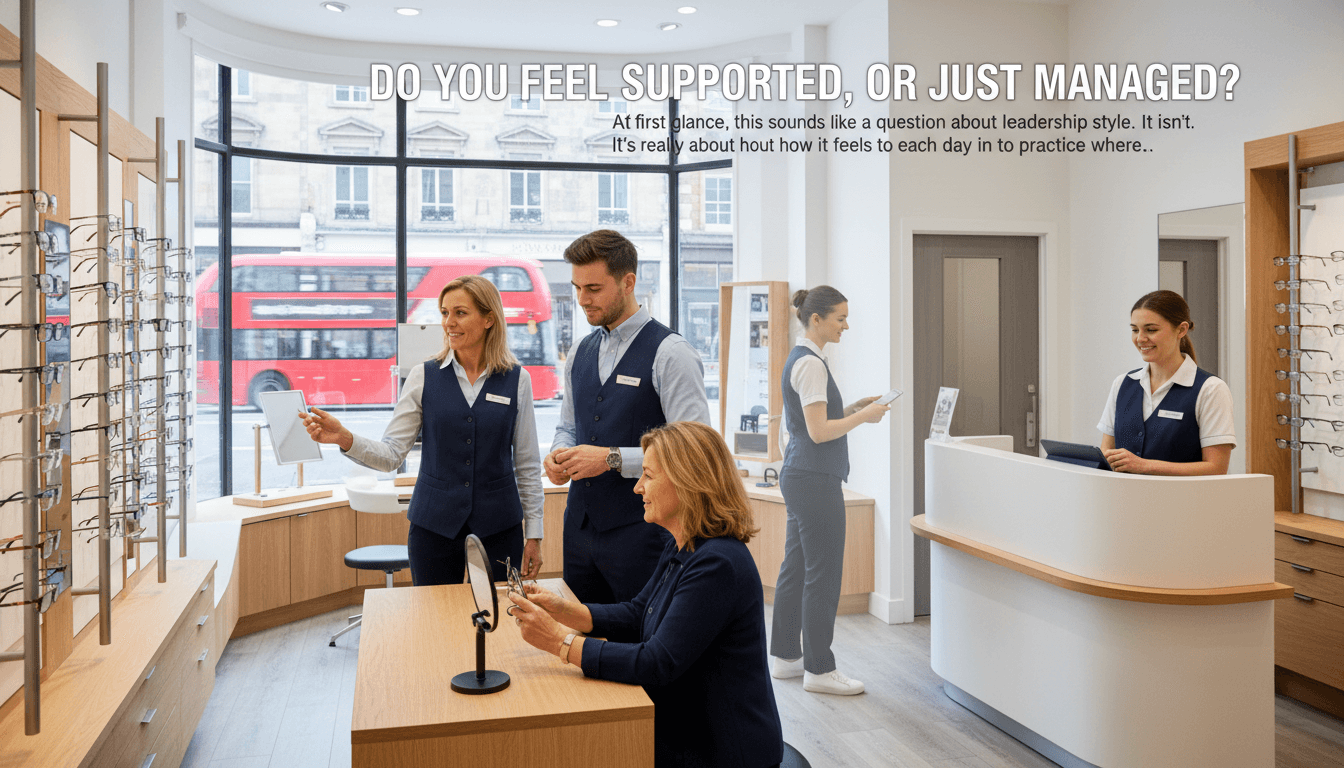
At first glance, this sounds like a question about leadership style. It isn’t. It’s really about how it feels to turn up each day in a practice where care, time, and commercial reality all lean on you at once, and whether the people around you make that weight lighter or simply keep it moving. It’s not about whether things are organised, or whether the diary is full, or whether targets are being met. It’s about whether anyone is actually standing with you while all of that happens.

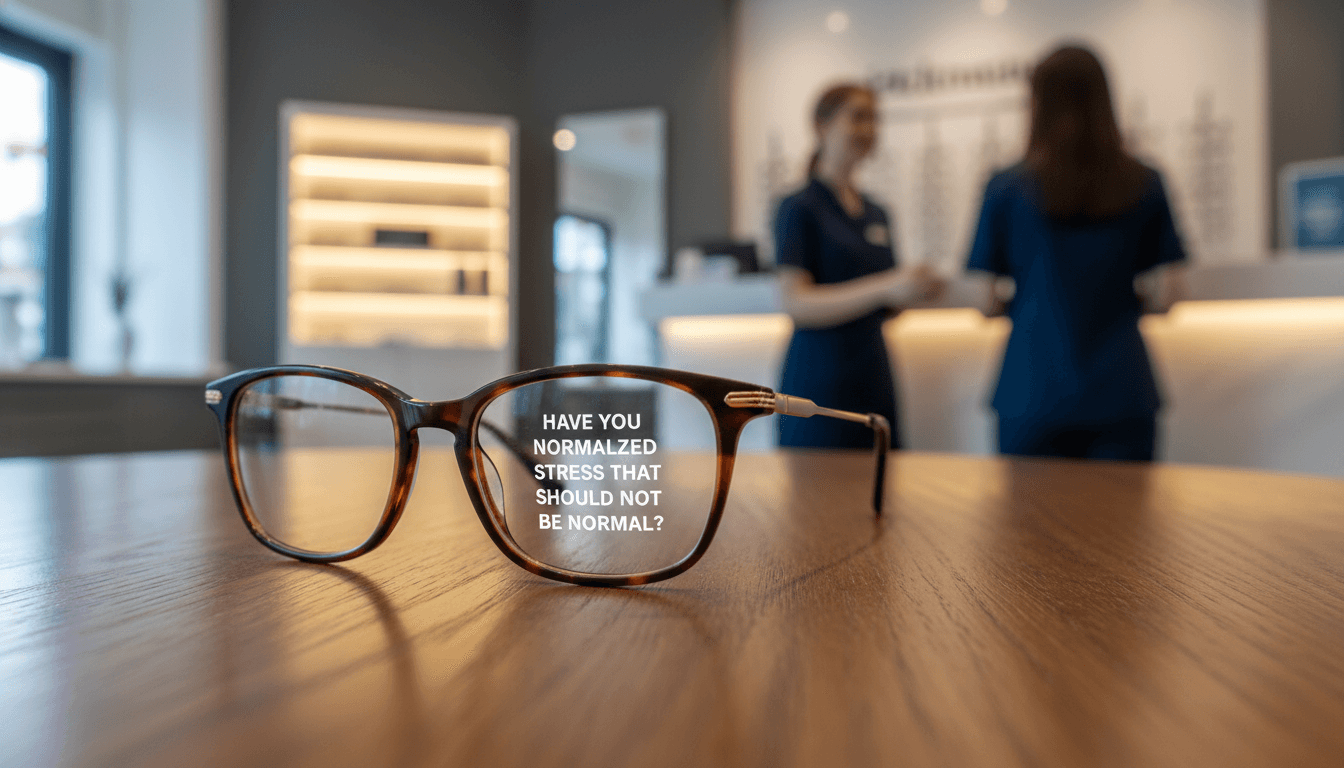
At first glance, this question can sound like a personal failing. As if it’s asking why you haven’t coped better, or why you’ve let something slip. But that isn’t what it’s really getting at. It’s not about resilience, or toughness, or whether you’re cut out for the work. It’s about how easily a certain level of strain can become the background noise of an optician’s day, so familiar that it barely registers anymore.

This question isn’t really about time management, or resilience, or whether you’re organised enough. It’s not about whether you care too much, or whether others seem to cope better than you do. It’s about something quieter and harder to pin down: the way work can start to follow you home, not in your diary but in your head, and how normal that can begin to feel without you ever deciding it should.

This question can sound bigger than it is. It isn’t really about ambition, or whether you secretly want a different career, or whether you should be grateful for what you have. It’s not even about loving your job. Most days in practice are too busy for that kind of thinking. It’s about something quieter and more persistent: the gap between how your working days actually feel and the kind of life those days are meant to be supporting.