Does your job give you energy, or drain it
It sounds like a simple question, but it rarely lands that way. It isn’t really about whether you enjoy your work, or whether you’re good at it. And it definitely isn’t about whether you’re grateful to have a job. It’s about something quieter and harder to admit: what it costs you to keep showing up as yourself, day after day, in a practice that never really slows down.
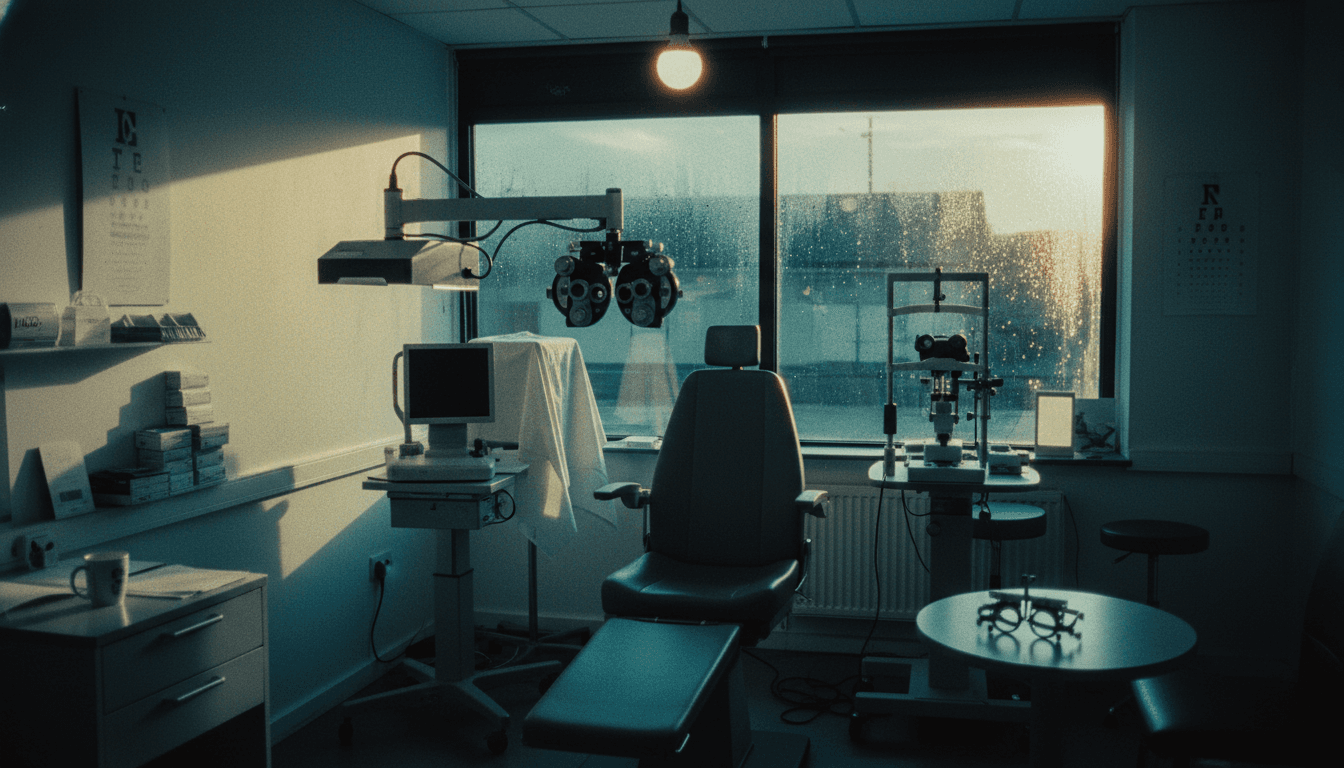
In an optician’s environment, energy is spent in small, constant ways. The clinic runs ten minutes late before mid-morning and never quite recovers. A patient arrives already frustrated, not really about their eyes but about the wait, and you carry that tone into the next interaction. Targets sit in the background like a low hum, not shouted about, just always there. None of this is dramatic. That’s the point. It’s the ordinary nature of it that makes the question matter.
For many people, the discomfort isn’t burnout in the dramatic sense. It’s the feeling that you’re always slightly braced. You leave work tired in a way sleep doesn’t fix. Not because the job is awful, but because it asks for a version of you that doesn’t quite fit anymore. That can be hard to name, especially when there are moments you still care deeply about and get right.
It’s worth saying this out loud: feeling drained doesn’t mean you’re weak, unprofessional, or in the wrong job. It also doesn’t mean standards should slip or behaviour gets a free pass. It just means the exchange between what you give and what you get back has shifted, often slowly enough that you don’t notice until you’re already there.
It might be worth asking yourself what kind of tired you usually feel at the end of the day. Is it the satisfying tiredness that comes from being fully engaged with patients and colleagues, or the flat, heavy tiredness that follows a day of holding things in and smoothing things over? When the clinic overruns and you squeeze in one more concerned conversation before closing, do you leave feeling you’ve done something worthwhile, or quietly resentful that your own time disappeared again?
Another question that can be uncomfortable, but useful, is where your energy goes during the day. Do you notice it lifting when you’re focused on someone’s care, only to drain away in the gaps between appointments when you’re juggling expectations, systems, and unspoken pressures? Or has even the patient-facing part started to feel like something you push through rather than lean into?
It’s also worth reflecting on how much of yourself you feel able to bring to work. Are you careful with your words at the front desk, not just to be professional but to avoid friction? In that quick handover in a quiet room, do you say what you really think, or what will keep things moving? Over time, that kind of self-editing can be surprisingly exhausting.
And then there’s the question of change. When you think about the last year, do you feel like you’ve grown in ways that matter to you, or like you’ve become more efficient at coping? Those two things can look similar from the outside, but they feel very different on the inside.
None of these questions demand an immediate answer. They’re not a verdict on your career or a prompt to make a big decision. They’re more like a check-in with yourself, the sort you rarely have time for between appointments and end-of-day tasks.
There’s usually a moment, though, when reflection starts to edge towards choice. Not a grand crossroads, just a subtle sense that something could stay the same, or shift slightly. That’s often where the energy question becomes useful rather than heavy.
If you wanted to take a step forward, even a small one, it might help to ask what parts of your day still give you a spark, however brief. Is it a particular type of patient interaction, a moment of problem-solving, or a conversation with a colleague who sees the work the way you do? How often do those moments happen now, and what gets in their way?
It can also be clarifying to think about boundaries in very practical terms. When the diary is full and running late, where do you routinely absorb the pressure, and where could it realistically be shared or acknowledged? What would change if you stopped treating constant overextension as the baseline?
Another gentle question is about honesty. If you were speaking to someone you trust, in the quiet after the doors close, how would you describe your relationship with your job right now? Not the polished version, but the real one. What words would you use if you weren’t trying to sound resilient?
And finally, looking ahead without forcing optimism, what would “more energy” actually mean for you in this role? Not happiness every day, but a sense of steadiness, or pride, or enough space to breathe between patients. What would need to be different, even slightly, for that to feel possible?
This isn’t about fixing anything quickly. It’s about noticing. Energy doesn’t just disappear overnight, and it doesn’t come back all at once either. Paying attention to how it moves through your working day is often the first honest step.
If any of this has landed for you, and you want to talk it through in plain terms, I’m always open to a reply. Sometimes it helps just to say out loud where you are, without having to turn it into a plan.
Where this could take you
Curious what the market looks like for you?
Build your perfect job in under two minutes - postcode in, salary bands, advertised and hidden-market vacancies out.
Build your perfect job