Would you choose this job again if you were starting over
It sounds like a question about career satisfaction, but it usually isn’t. It’s not really about whether you enjoy the work, or whether you’d recommend it to someone else, or whether the industry has changed since you first stepped into it. It’s a quieter, more personal question than that. It’s about whether the version of you who walks into work now still recognises why you said yes in the first place.
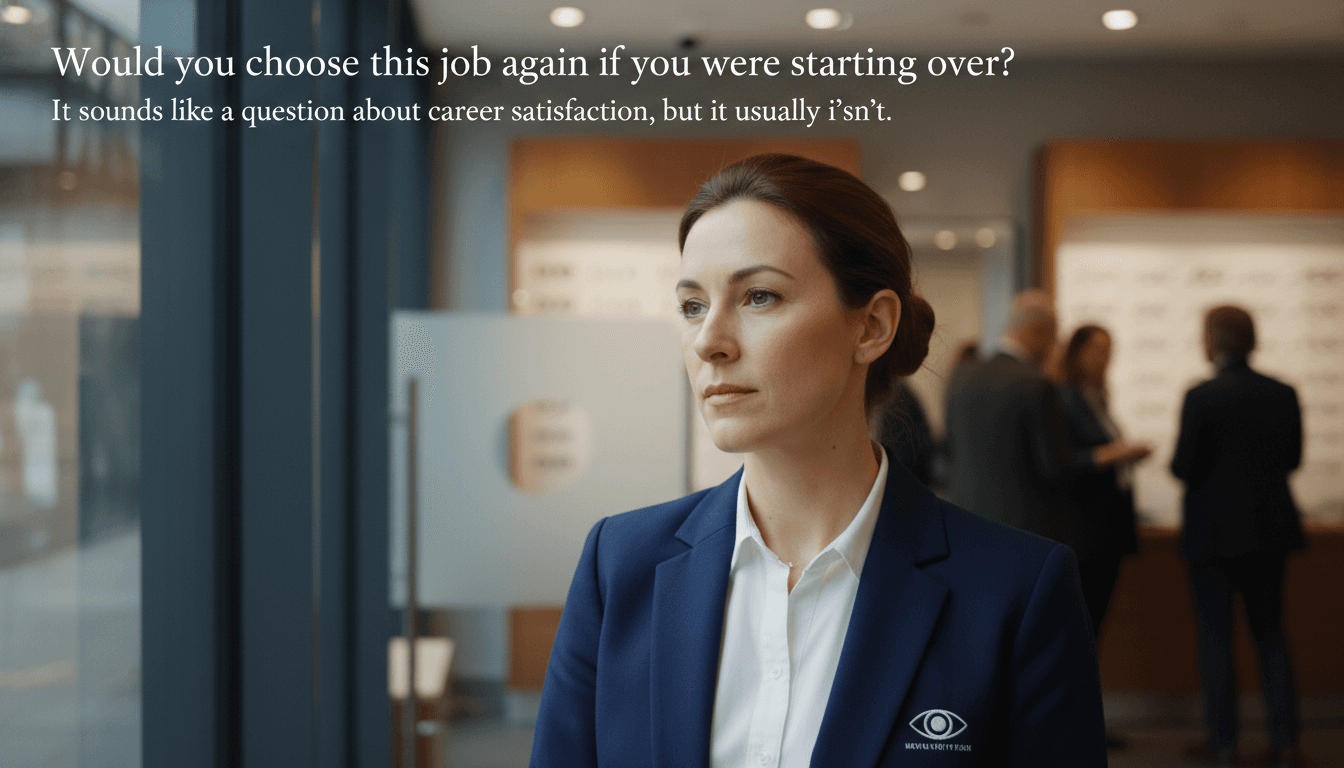
Most people don’t ask it out loud. It tends to surface on a Tuesday afternoon when the clinic is already running late, the diary is packed tighter than it should be, and someone at the front desk catches your eye because a patient has been waiting longer than planned. It’s there when you feel the pull between wanting to give someone the time they deserve and knowing there’s a number sitting somewhere in the background that doesn’t care about nuance or care. The question isn’t dramatic. It’s tired. It’s reflective. And it can be uncomfortable.
It’s worth saying early that asking this doesn’t mean you’ve failed, or that you’re ungrateful, or that you’re secretly looking for the exit. It also doesn’t mean the standards should drop or that difficult days get a free pass. It just means you’re paying attention to how the job has landed on you over time, and that matters in a profession where so much of yourself goes into the room with each patient.
It might be worth asking yourself what version of the job you were choosing back then. Was it the sense of purpose that came with being responsible for someone’s vision, the quiet pride in getting something right that really mattered? Was it the rhythm of the day, the mix of routine and unpredictability, the feeling of being trusted? Or was it simply that it felt like a solid, respectable path where effort and care would be noticed? Those reasons don’t disappear, but they can get buried under pressure.
Another question that tends to sting a little is whether the job you’re doing now still resembles the one you imagined, or whether it’s slowly shifted while you were busy keeping up. When you’re explaining a delay to a patient who arrived on time and looks genuinely worried, do you feel backed by the system around you, or exposed by it? When the last appointment of the day brings a concern you weren’t expecting, do you feel you have space to respond properly, or are you already thinking about what’s waiting after closing time?
There’s also the quieter layer about identity. Do you still feel like yourself at work, or have you become very good at holding a version of you that fits the pace and the targets but feels slightly narrower than it used to? That doesn’t mean you’ve lost anything. It might just mean you’ve adapted so well that you haven’t checked the cost of that adaptation in a while.
A question that often goes unspoken is whether you’d choose this job again knowing what you now know, not about the tasks, but about the emotional weight. Knowing how often you’ll be the one managing uncertainty, reassurance, disappointment, or frustration in the gaps between appointments. Knowing how rarely the good moments announce themselves, and how easily they’re crowded out by what still needs doing.
None of this points to a single answer. Some people would still choose it without hesitation, even with the rough edges fully in view. Others might pause longer than they expected. That pause doesn’t demand a decision. It just asks for honesty.
There’s a moment, usually after the rush has eased a little, when you can feel the difference between being drained and being misaligned. They’re not the same thing. One passes with rest. The other lingers even after a decent break. Noticing which one you’re dealing with can be surprisingly clarifying.
If you wanted to take a step forward, even a small one, it might start with asking what parts of the job still feel quietly right to you when nobody’s watching. Is it the careful conversation in a cramped room when you know you made someone feel heard, even though the clock was ticking? Is it the satisfaction of a smooth handover at the end of a long clinic, when things didn’t unravel despite the pressure? Those moments are easy to dismiss, but they often hold the real answer.
It might also help to ask where the job asks more of you than it gives back, and whether that’s a temporary stretch or something that’s become normal without you agreeing to it. When you think about the next year, what feels negotiable and what feels fixed? And who, if anyone, actually knows how that balance feels from where you’re standing?
Finally, there’s the question of choice itself. If you strip away the idea of starting over entirely, what choices do you still have inside the role you’re in now? What conversations have you been postponing because there never seems to be a good moment between appointments? What would change if the job didn’t have to be justified, only inhabited honestly?
You don’t have to answer any of this neatly. In truth, most people don’t. But if this question has been circling for you, it might be worth talking it through rather than carrying it alone. If you want to reply and tell me where it’s landing, I’m here to listen.
Where this could take you
Curious what the market looks like for you?
Build your perfect job in under two minutes - postcode in, salary bands, advertised and hidden-market vacancies out.
Build your perfect job