Employed, Partner or Concession: How UK Optical Employers Actually Structure Jobs
Specsavers, Boots, Vision Express, supermarket concessions and independents employ optical professionals in structurally different ways. What each model means for your pay, autonomy and progression.
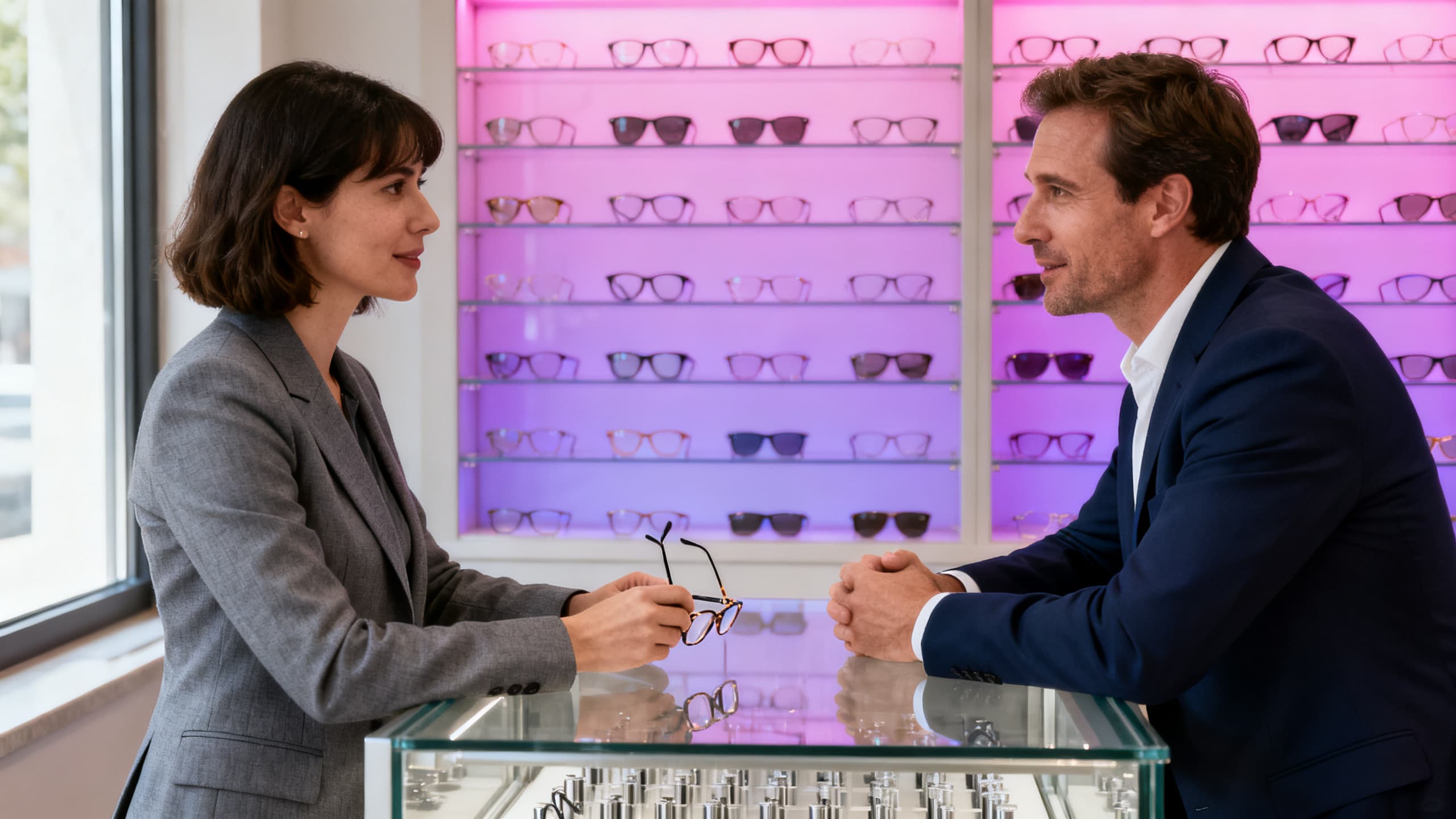
Two optometrists, both working in a well-known high-street brand, both seeing the same number of patients a day, can be in completely different legal and financial positions. One is an employee of a national company. One is a part-owner of a business that happens to carry the national brand above the door. A third, in a supermarket, may be employed by neither the supermarket nor the optical brand.
Almost nobody explains this before you apply. It changes what your pay is made of, who decides your clinic times, and what happens to your career if the business has a bad year.
The four models
Directly employed by a national company. You are on a national contract with national terms. Pay bands, holiday, sick pay, pension and progression are set centrally and are broadly consistent between branches. Decisions about staffing, targets and test times are made above your store. Boots Opticians, which operates several hundred UK stores, and Vision Express — which absorbed the Tesco Opticians estate in 2017 — both run substantially on this model.
What it gives you: predictability, transferability between branches, formal HR process, and a published pay ladder. What it costs you: very little say over how the clinic runs.
Partnership or joint venture. Specsavers is the best-known example, and its model is set out on its own corporate site: stores are run as joint ventures, with an optometrist or dispensing optician partner co-owning the business rather than simply managing it. Your income is then partly a share of a business you have bought into, not only a salary.
What it gives you: real ownership, real upside, real control over how your store runs. What it costs you: capital, personal financial risk, and a job that includes running a business — recruitment, stock, P&L, staff problems — alongside clinical work. As an employee inside a partner-run store you are employed by that store's business, not by the national company, which is a distinction worth understanding before you assume national terms apply.
Concession. The optical practice sits inside another retailer's store — supermarkets being the common case — and is operated either by the retailer or by a separate optical group under contract. Trading hours follow the host store, which is why concession roles more often involve evenings and Sundays.
What it gives you: footfall, and often better-than-expected pay for the role level because the hours are less convenient. What it costs you: a working pattern set by a supermarket's opening times.
Independent or small group. A single practice or a handful, owned by an optometrist or a family, sometimes across several generations. Terms are negotiated rather than published.
What it gives you: the longest test times in the sector, the widest clinical variety, the most enhanced-services exposure, and a direct line to the person who decides things. What it costs you: no HR department, no published pay scale, and progression that depends on one person's plans.
Why the model matters more than the brand
Three practical consequences.
Your pay is made of different things. A salaried role is a salary plus, perhaps, a bonus. A partner's income is drawings and profit share against a capital commitment. A concession role may carry premium rates for unsocial hours. Comparing the headline numbers across models tells you almost nothing.
Your employer may not be who you think. In a partner-run or franchised store, your contract is with the local business. National policies, national pay reviews and national grievance processes may not apply to you. Ask, in writing, which legal entity employs you.
Your progression route is different. In a nationally employed structure, progression means moving up defined bands, often across branches. In a partnership structure, the top of the ladder is buying in — a financial decision as much as a career one. In an independent, progression is whatever you negotiate.
Questions that establish the model
Ask these at interview. All four are reasonable, none is awkward, and the answers tell you more than the job description does.
- Which legal entity would employ me?
- Are the pay bands, pension and holiday terms set nationally or locally?
- Is there a route to partnership or ownership here, and what would it require financially?
- Who decides appointment lengths and clinic structure — this store, or a central team?
A follow-up worth adding for concession roles: which contract governs your trading hours, and can they change without your agreement?
Where to look for honest answers
Employee review sites are useful for sentiment and weak on structure. Review volumes vary enormously between employers — several thousand reviews for the largest groups, and only a handful for some smaller or newer optical operations — so treat a low-volume rating as noise rather than a verdict.
For structure, the employer's own corporate and careers pages are usually accurate and specific. For what a role is actually like day to day, the most reliable source is someone who has worked in that specific store, which is where a recruiter who knows the practices individually is genuinely more use than an aggregate score.
If you want to compare what's advertised across models, current vacancies covers employed, concession, partner-run and independent practices, and the salary checker shows where an offer sits against advertised ranges.
None of these is the right answer
A partner-run store can be the best employer in a town or the worst, depending on the partner. A national employer can be reassuringly consistent or frustratingly remote. An independent can give you the clinical career you wanted or leave you with no development plan for five years.
The point is not to pick a model. It is to know which one you are being offered, so that you are asking the right questions and comparing the right numbers.
Frequently asked questions
Is a Specsavers optometrist employed by Specsavers? Not necessarily in the way people assume. Specsavers operates a joint venture partnership model, set out on its own corporate site, in which stores are co-owned by partners. Staff in a partner-run store are generally employed by that store's business rather than by the national company. Always confirm which legal entity your contract is with.
What is the difference between a concession and a standalone optical practice? A concession operates inside another retailer's store, usually a supermarket, and follows that store's trading hours. A standalone practice sets its own. The main practical differences are working pattern and footfall.
Which optical employer model pays best? It depends on what you are comparing. Salaried national roles offer predictable bands; partnership offers ownership upside against capital risk; concession roles often pay a premium for unsocial hours; independents vary widely. Compare the structure of the pay, not just the headline figure.
How do I find out who actually employs me before I accept a job? Ask directly which legal entity issues the contract, and check the employer name on the written offer rather than the brand on the shopfront.
Can I move between optical employers easily? Between branches of a nationally employed group, usually yes. Between models — from employed to partner, or from a multiple to an independent — the terms are renegotiated from scratch, so treat it as a new job rather than a transfer.
Where this could take you
Curious what the market looks like for you?
Build your perfect job in under two minutes - postcode in, salary bands, advertised and hidden-market vacancies out.
Build your perfect job